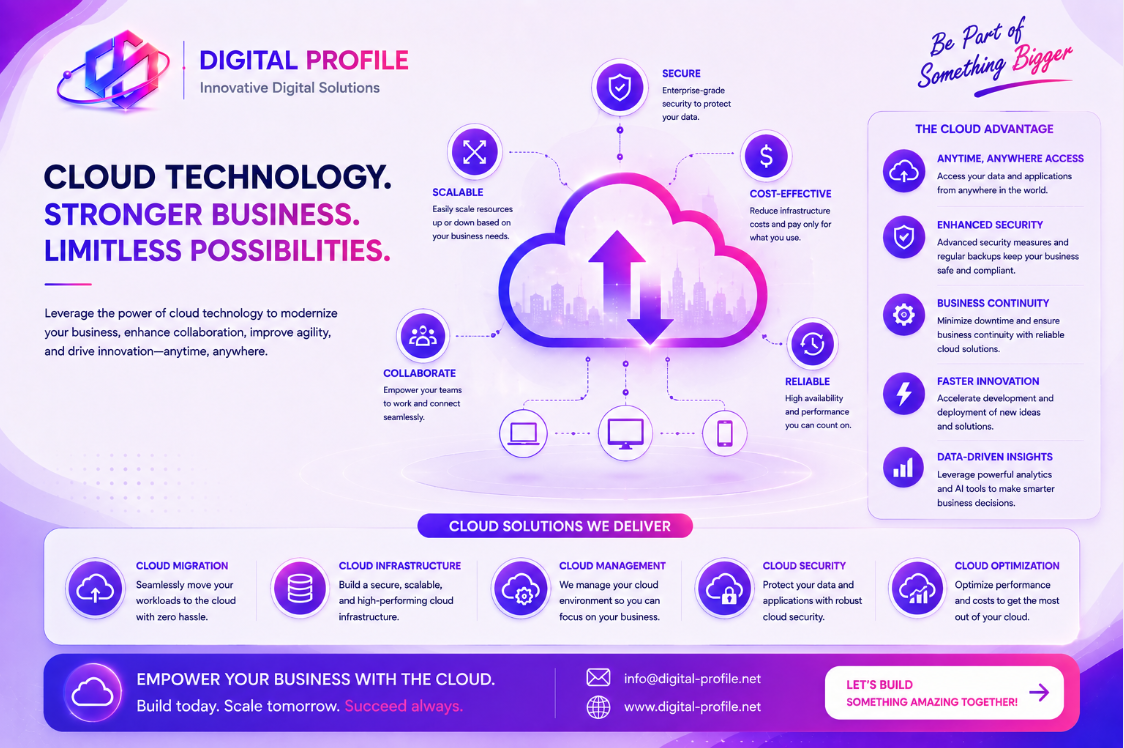
Cloud technology has become an important part of modern business infrastructure. Instead of relying entirely on physical servers and locally installed systems, businesses can use cloud platforms to host applications, store data, run services, support employees, and connect digital operations.
For organizations of different sizes, cloud technology can provide greater flexibility while helping teams build and operate digital systems without having to manage every piece of physical infrastructure themselves.
What Is Cloud Technology?
Cloud technology refers to computing resources and services delivered through a network, typically the internet. These resources can include computing power, storage, databases, networking, applications, and development platforms.
Instead of purchasing and maintaining all infrastructure locally, businesses can access computing resources from cloud providers and configure them according to their operational requirements.
Why Cloud Technology Matters for Businesses
Traditional infrastructure can require significant planning and maintenance. Businesses may need to purchase hardware, configure servers, manage storage, maintain networks, and plan capacity for future growth.
Cloud technology provides another approach by allowing organizations to provision many resources on demand.
- Scale computing resources as requirements change
- Reduce dependence on physical infrastructure
- Support remote and distributed teams
- Deploy applications more efficiently
- Centralize access to business data and services
- Improve infrastructure flexibility
- Support modern digital applications
Common Cloud Services for Business
Cloud platforms provide a wide range of services. Businesses can select the technologies that match their application, infrastructure, and operational needs.
- Cloud computing and virtual machines
- Cloud storage
- Managed databases
- Application hosting
- Cloud networking
- Backup and disaster recovery
- Monitoring and logging
- Development and deployment platforms
These services can be combined to create complete cloud environments for websites, applications, internal systems, APIs, and other business workloads.
Cloud Applications and Business Systems
Businesses can use cloud infrastructure to host custom applications and internal systems. This can include customer portals, inventory platforms, HR systems, reporting applications, e-commerce platforms, and business management software.
Cloud-based applications can also make it easier for authorized users to access business systems from different locations and devices.
Scalability and Business Growth
One of the major advantages of cloud infrastructure is its ability to support changing workloads.
A growing business may experience increases in website traffic, application usage, stored data, or customer activity. Cloud resources can be adjusted to accommodate changing requirements.
This flexibility can be particularly useful for businesses that experience seasonal demand, rapid growth, or unpredictable changes in workload.
Cloud Technology and Remote Work
Modern businesses increasingly operate across multiple locations. Cloud-based systems can support this model by allowing authorized employees to access applications, documents, databases, and collaboration tools through secure connections.
This can help organizations create more flexible workflows while reducing dependence on a single physical office or local network.
- Remote access to business applications
- Centralized cloud storage
- Online collaboration
- Cloud-based communication
- Centralized business information
Cloud Security for Business
Moving systems to the cloud does not automatically make them secure. Cloud security requires appropriate architecture, configuration, access controls, monitoring, and operational practices.
Businesses should consider security throughout the entire cloud environment rather than treating it as something added after deployment.
- Strong authentication
- Role-based access controls
- Encryption where appropriate
- Secure network configuration
- Regular backups
- Logging and monitoring
- Software and infrastructure updates
- Security reviews and testing
Cloud Migration: Moving Existing Systems
Businesses that already operate traditional servers or locally hosted applications may consider migrating some workloads to the cloud.
Cloud migration does not necessarily mean moving every system at once. Organizations can evaluate workloads individually and determine which applications or services would benefit from cloud infrastructure.
- Assess existing applications and infrastructure
- Identify dependencies and data requirements
- Evaluate security and compliance considerations
- Select an appropriate cloud architecture
- Test the migration plan
- Move workloads in manageable stages
- Monitor performance after migration
Cloud Technology and Business Automation
Cloud platforms can provide the infrastructure needed for automated business workflows. Applications, APIs, databases, scheduled processes, and AI-powered services can work together within a cloud environment.
For example, a business could create an automated process that receives information through an online form, stores the data in a cloud database, triggers an application workflow, and sends a notification to the appropriate team.
Choosing the Right Cloud Approach
There is no single cloud architecture that is suitable for every business. The right approach depends on the organization's applications, budget, security requirements, workload, technical capabilities, and long-term goals.
Businesses may use public cloud services, private infrastructure, hybrid environments, or combinations of different technologies.
The goal should not simply be to move technology to the cloud. The goal should be to create an infrastructure environment that supports the organization's actual business requirements.
Important Considerations Before Adopting Cloud Technology
Before moving business workloads to the cloud, it is important to understand the operational and technical requirements involved.
- Current infrastructure and application requirements
- Data storage and backup requirements
- Security and access requirements
- Expected workload and traffic
- Availability and recovery requirements
- Integration with existing systems
- Cloud operating and maintenance costs
- Internal technical capabilities
Careful planning can help businesses avoid unnecessary complexity and select cloud services that provide meaningful operational value.
The Role of Cloud Technology in Modern Business
Cloud technology has become an important foundation for modern digital operations. It can support websites, applications, databases, APIs, collaboration platforms, automation workflows, analytics, and many other business services.
Its biggest value is not simply replacing physical servers. Cloud technology can give businesses greater flexibility in how they build, deploy, scale, and manage digital systems.
Businesses that approach cloud adoption strategically can use it to create more adaptable infrastructure, support digital growth, and connect technology more effectively with their operational goals.
The best cloud strategy is therefore one designed around real business requirements rather than technology alone. By identifying the right workloads, selecting appropriate services, and planning security and scalability from the beginning, organizations can build a stronger foundation for their digital operations.
Ready to Build a Cloud-Ready Business?
Explore practical cloud and digital solutions designed to help modern businesses build scalable applications, connect systems, manage data, and improve their technology infrastructure.
Discuss Your Project