Digital Transformation Consulting
Practical digital transformation consulting to help businesses modernize operations, improve workflows, automate processes, integrate technology, and build scalable digital solutions.
Digital transformation is more than adopting new technology. It involves improving how a business operates, manages information, serves customers, connects systems, and uses technology to support its long-term objectives. Digital Profile provides digital transformation consulting focused on practical, scalable, and business-oriented technology improvements.
Professional Digital Transformation Consulting
Digital transformation consulting helps organizations understand where technology can create meaningful improvements across their operations. Instead of introducing technology without a clear purpose, transformation begins with understanding existing processes, business challenges, information flows, customer needs, and operational goals.
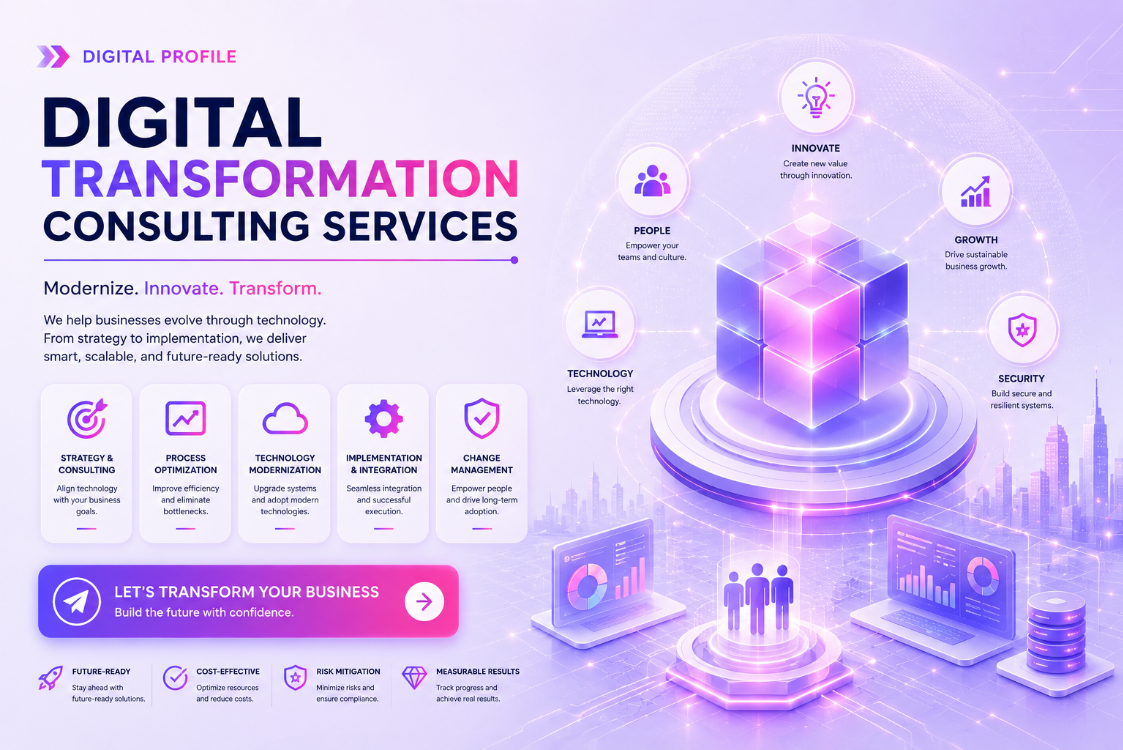
Our approach focuses on identifying practical opportunities to simplify workflows, reduce unnecessary manual tasks, improve access to information, connect business systems, and establish a technology foundation that can support future development.
Our Digital Transformation Consulting Services
Every organization has different processes, technology requirements, resources, and priorities. Digital transformation consulting can therefore cover individual improvements or a broader technology strategy depending on the organization's needs.
- Digital Transformation Strategy
- Business Process Analysis
- Technology Assessment
- Workflow Automation Planning
- Business System Integration
- Custom Software Planning
- Cloud Technology Consulting
- API Integration Strategy
- Database and Information Management
- Digital Operations Improvement
- Technology Roadmap Development
- Digital Modernization Planning
Business Process Improvement
Effective digital transformation starts with the processes that support daily business operations. Repetitive tasks, disconnected systems, duplicate data entry, manual reporting, and inefficient information flows can make it harder for teams to work efficiently.
A business process review can help identify areas where digital tools, automation, system integration, or redesigned workflows may improve operational efficiency. The objective is to create practical improvements that support employees and business objectives.
- Review existing business workflows
- Identify repetitive manual processes
- Map information and data flows
- Identify opportunities for automation
- Reduce unnecessary duplicate data entry
- Improve communication between systems
- Organize operational information
Technology Strategy Built Around Your Business
Technology decisions should be connected to business requirements. A successful digital transformation strategy considers current systems, available resources, security requirements, operational processes, integration needs, and future growth.
Digital Profile helps organizations evaluate technology options and identify solutions that fit their specific operational requirements. Depending on the project, this may include custom web applications, APIs, databases, cloud services, automation platforms, or system integrations.
The goal is to establish a technology environment that is practical to manage today while providing a flexible foundation for future improvements.
- Business-focused technology recommendations
- Scalable technology architecture
- Integration with existing systems
- Security-conscious technology planning
- Cloud and infrastructure considerations
- Data and database planning
- Long-term technology roadmap development
Technologies Supporting Digital Transformation
Digital transformation may involve multiple technologies working together. The appropriate technology stack depends on the organization's requirements, existing infrastructure, project scope, and future plans.
Web Applications
HTML5, CSS3, JavaScript, responsive interfaces, and custom business applications.
Application Development
ASP.NET Core, C#, Blazor Server, and Blazor WebAssembly.
Databases
SQL Server, SQLite, PostgreSQL, structured data, and database-driven systems.
APIs & Integration
REST APIs, JSON, Swagger, and third-party system integrations.
Cloud & Infrastructure
Cloud-based deployment, Cloudflare, Azure, Docker, and modern infrastructure.
Security
HTTPS, authentication, authorization, JWT, OAuth, and secure application practices.
Workflow Automation & Operational Efficiency
Workflow automation can help businesses reduce repetitive administrative work and create more consistent processes. Automation opportunities can include data processing, notifications, approvals, reporting, record management, system synchronization, and other recurring tasks.
The right level of automation depends on the process being improved. Digital transformation planning should consider business rules, user responsibilities, data requirements, system limitations, and security before automation is introduced.
- Automated data processing
- Workflow and approval automation
- Automated notifications
- Reporting and dashboard workflows
- System-to-system data synchronization
- Customer and employee self-service processes
- Administrative task reduction
System Integration & Digital Connectivity
Many organizations use multiple applications for different parts of their operations. When systems do not communicate effectively, employees may need to manually transfer information between platforms.
Digital transformation can improve connectivity through APIs, databases, secure integrations, and carefully planned application architecture. Connecting systems can help create more consistent information flows and reduce unnecessary manual work.
- REST API integration
- Third-party application integration
- Database connectivity
- Cloud service integration
- Authentication integration
- Data synchronization
- Business application integration
Digital Modernization for Growing Businesses
Digital modernization does not always require replacing every existing system. In many cases, businesses can improve their technology environment gradually by addressing the most important operational challenges first.
A phased approach can make digital transformation easier to manage by allowing organizations to prioritize projects, evaluate results, manage resources, and introduce new technology over time.
- Modernize outdated business workflows
- Improve existing applications
- Introduce cloud-based services
- Connect disconnected systems
- Improve data accessibility
- Automate appropriate business processes
- Plan future technology improvements
Related Digital Technology Services
Digital transformation often involves multiple technology services working together. Explore related Digital Profile services that can support your organization's technology modernization plans.
Our Digital Transformation Consulting Process
A structured consulting process helps organizations move from identifying business challenges to planning practical technology improvements. The exact process can vary depending on project size, business requirements, and existing systems.
- Discovery: Understand your business goals, current processes, systems, challenges, and priorities.
- Assessment: Review existing technology, workflows, data, integrations, and operational requirements.
- Opportunity Identification: Identify areas where automation, integration, modernization, or new technology may provide practical improvements.
- Strategy: Develop recommendations based on business priorities, resources, technical requirements, and long-term objectives.
- Roadmap: Organize recommended improvements into practical phases and priorities.
- Implementation: Support the development, integration, deployment, or improvement of selected digital solutions.
- Continuous Improvement: Review technology performance and identify future opportunities for optimization and expansion.
Consulting Quotation & Payment Process
Every digital transformation project has different requirements. Consulting scope, technical complexity, project size, and implementation requirements can vary between organizations.
After receiving your requirements, Digital Profile reviews the project and prepares a personalized quotation when appropriate. The quotation may outline the proposed consulting scope, deliverables, estimated timeline, pricing, and payment terms.
- Contact us with your digital transformation requirements.
- We review your business goals and current technology needs.
- Additional information may be requested when necessary.
- A personalized quotation or service proposal is provided.
- Work begins after the agreed terms and payment requirements have been confirmed.
The final scope and pricing depend on the services required. Consulting-only projects, development projects, integrations, and ongoing support may have different requirements and pricing structures.
Long-Term Digital Transformation Support
Digital transformation is an ongoing process rather than a one-time technology project. Business requirements, customer expectations, technology, security considerations, and operational priorities can change over time.
Digital Profile can support continued improvements through application development, API integration, cloud deployment, automation, maintenance, performance optimization, and technical support. This allows organizations to continue improving their digital capabilities as their needs evolve.
FAQ
Frequently Asked Questions
Digital Transformation Strategy
Ready to Modernize Your Business?
Identify practical opportunities to improve your business processes, automate repetitive work, integrate systems, and build a stronger digital foundation for future growth.